For children and adolescents facing mental health challenges, treatment often comes with an unsettling disruption: stepping away from school, peers and the routines that provide stability. East Alabama Medical Center (EAMC) North is redefining the experience by ensuring young patients don’t have to pause their education to focus on healing.
“We care for children and adolescents at some of the most vulnerable moments of their lives. Being trusted to provide care during these times is very sacred to us, and we have made it a point to create a place where safety, compassion and hope come first,” says Curtis Carleton, executive director of Psychiatric Services of East Alabama Medical Center North.
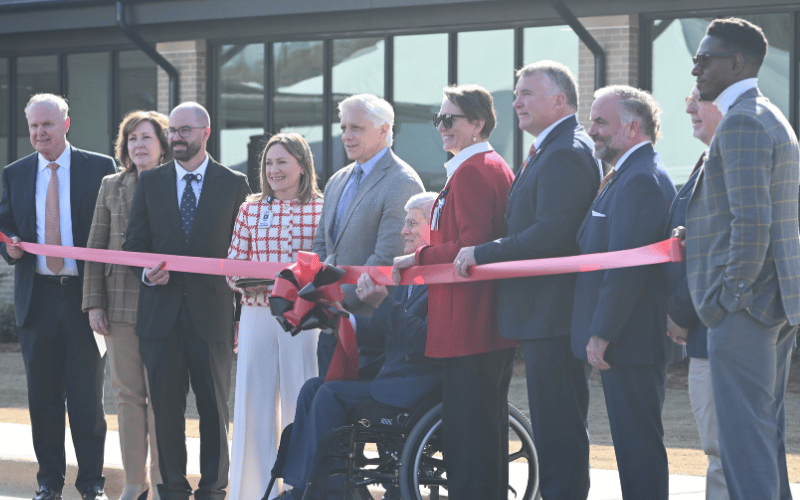
Opened Dec. 17, 2025, on East Alabama Health’s North Campus in Opelika, the 54,000-square-foot mental health facility represents a significant step forward in psychiatric care. EAMC North addresses a critical shortage of psychiatric care statewide. One in five Alabamians has experienced a mental health episode, and access to inpatient services has long been limited. The new facility increases East Alabama Health’s inpatient psychiatric bed count from 28 to 40, expanding access for adults, adolescents, and children across the region.
In collaboration with mental health care, the center is designed with classrooms, accredited educational support, and hands-on life-skills spaces. EAMC North allows children and adolescents to continue learning while receiving the care they need.
The facility includes both short-term child and adolescent inpatient units and a long-term adolescent unit, each equipped with a dedicated classroom. For patients in the long-term program, education goes even further: adolescents may continue working toward and even earn a high school diploma through Opelika City Schools, supported by the facility’s onsite, SACS-accredited school, East Alabama Academy. It is the only long-term adolescent psychiatric unit of its kind in the state of Alabama.
“Our onsite classroom, which operates year-round instead of a traditional school year, allows students to not just continue their education, but also hold on to a sense of normalcy during a very difficult time,” says Carleton.
In addition to academic instruction, the long-term adolescent unit features a hands-on learning kitchen where patients can build practical life skills, fostering independence and confidence as part of their recovery journey.
Sarah Nunnelly, administrator of EAMC North and Chief Strategy and Business Development Officer, says, “This model of care recognizes that when we invest in a child’s healing, we’re investing in the future of our community. By surrounding young patients with compassion, structure and support during their most vulnerable moments, we help them return to their lives outside of our facility with more confidence and more tools to be successful in their day-to-day living.
“That ripple effect reaches classrooms, neighborhoods and families across our region which in turn, creates a healthier, more hopeful community for everyone,” she says.
Adult inpatient care is organized into separate male and female wings, each with its own common areas and outdoor courtyards designed to promote calm, safety, and connection. Natural light, bright interiors, and welcoming shared spaces reflect a design philosophy rooted in healing rather than confinement.
Beyond inpatient services, EAMC North expands its outpatient care through East Alabama Psychiatric Services (EAPS), which moved into a new, modern space within the facility. With more than 15 provider offices, private consultation rooms, and a calming atmosphere, the expanded clinic supports therapy, medication management and follow-up care.
Since 2023, East Alabama Health has added six mental health providers, including psychiatrists and a clinical psychologist. In July 2025, it also launched a Psychiatry Residency Program aimed at training and retaining physicians in the region.
At its heart, East Alabama Medical Center North is about more than treatment. It’s about preserving continuity, restoring hope, and ensuring that even during mental health challenges, youth and adult patients can keep learning, growing and imagining what comes next.